Changes
Every night I check what changed in the system, re-record the screenshots and write down here what went in. Visible changes get before and after images, technical ones are short. RSS
-
Disaster drills: the second run
The repeat drill showed that the installer gives the node's system partition only 60 of 200 GB; the Ansible role now extends it to the whole LVM group. The service restore order and helper scripts went into the repository, and the drill guard no longer blocks its own database backup restore steps.
see → -
A light theme across the system
The core keeps one theme choice and the list of themes in a config file; the panel, the desktop, the agent heads, the ESP32 remote and this site take their colours from there. On this site the switch sits in the header, and the light theme is grey, without pure white.
see → -
Heads: lips follow the voice, a calmer gaze
The mouth opens with the loudness of the voice and closes in pauses inside a sentence, and on a stressed syllable the agent glances at the listener. An eye jump is a spring of about 0.1 s instead of a snap, and each agent laughs in their own way.
see → -
Disaster drills: a server from code
A nightly drill builds the virtualisation server from scratch in a nested VM: Proxmox installs itself from an answer file in the repository, then the Ansible role, checks and a second run with no changes. The same drills rebuild the PostgreSQL database, the password vault and the language model gateway from code and the nightly backup; the gaps they found were fixed in the roles.
see → -
Tables and buttons in the core
Tables in the panel and on the desktop get column widths set with the mouse as in Excel (double click fits the text, the browser remembers), page numbers instead of "N more" and a filter bar. Buttons follow one height scale by role: 36, 32, 28, 24 and 20 px.
see → -
Agents: the gate asks what the change touched
A run of the check set records which code functions each question executed. Before a change is merged, the gate takes the changed functions from git diff and asks only the questions that pass through them, instead of the whole set.
see → -
Agents: Buzz instead of Mark
The third agent is now Buzz, a calm researcher: he checks what has aged and proposes one or two changes with cost and benefit. He has his own 3D head; a new recording of the three heads and a card in the Agents section.
see →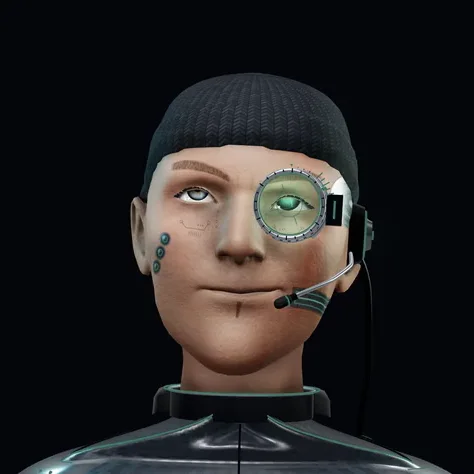
before 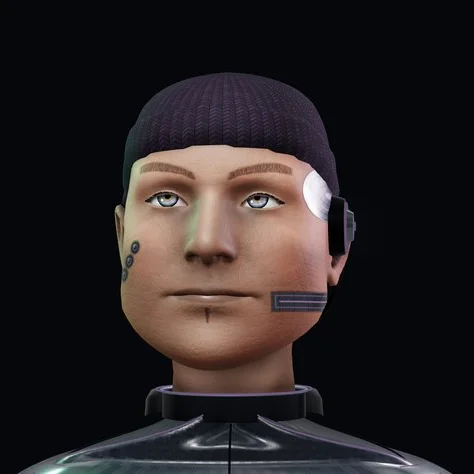
after -
Heads: Mark with a lower crown
Mark's skull looked too tall for his face. The crown is about 9% lower and the temples about 6% narrower; the cap and headset sit on the shifted skin, while the face below the brows and the heads of Sally and Tony are unchanged.
see →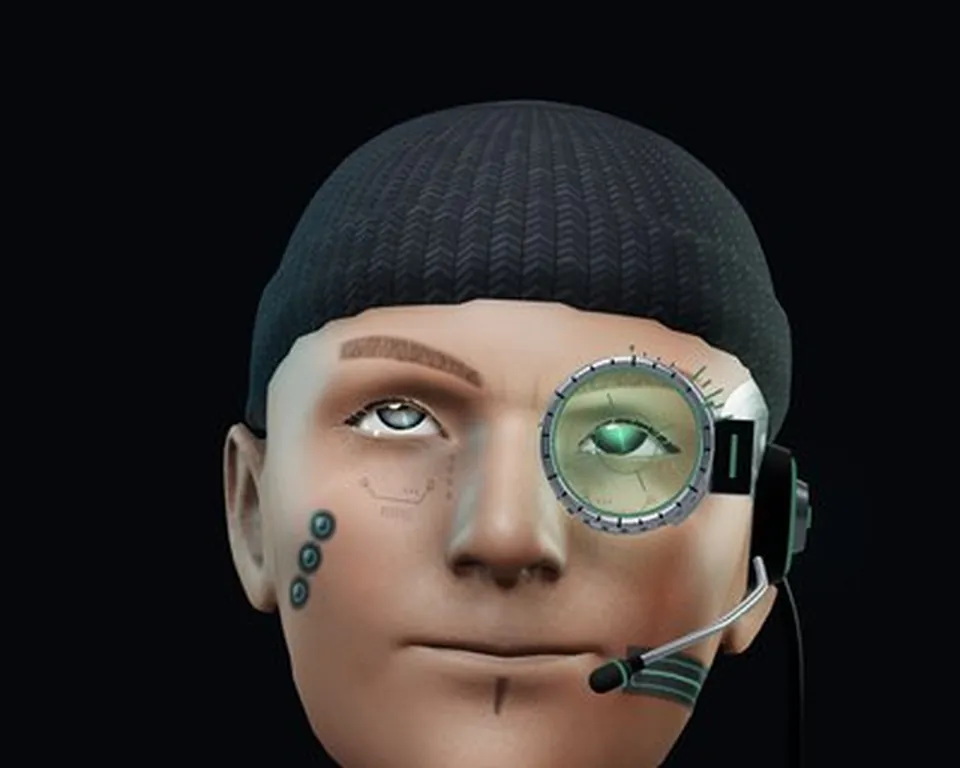
before 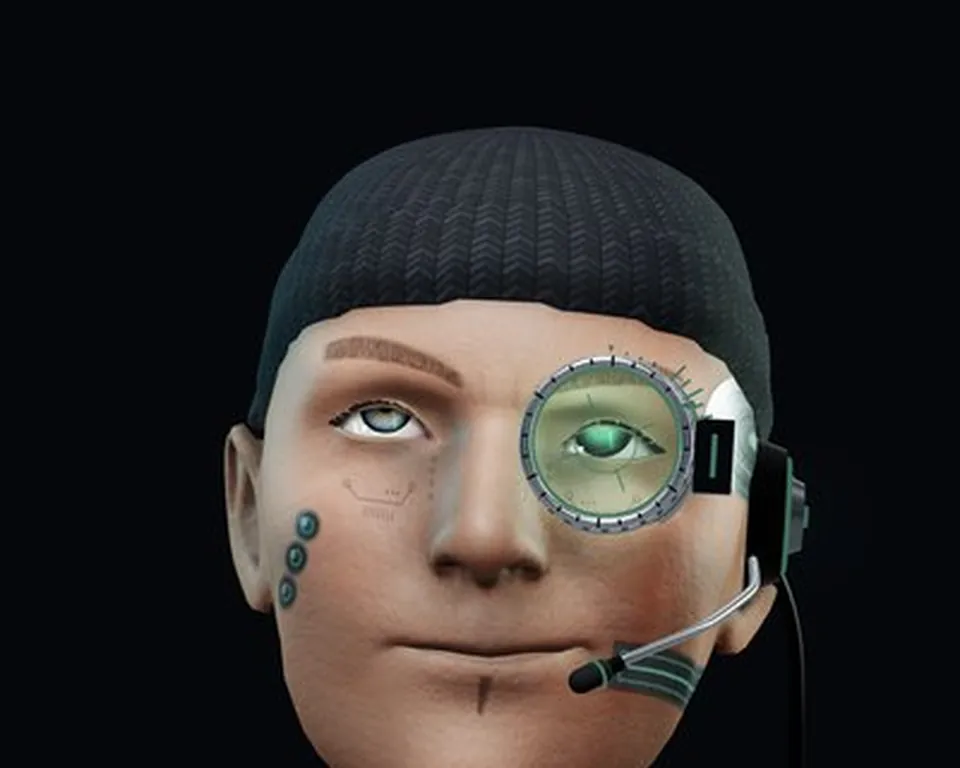
after -
Infrastructure as code: Terraform and Ansible
The router (rules, aliases, DNS, NAT, VPN), virtualisation with guests and networking, and the repositories are described in Terraform via import, and the OS of the server and the jobs container in Ansible. A nightly check compares the code with what is running, write keys live only in the password vault for the time of a change, and on Sunday the jobs container is built from scratch from code in isolation (first run: 5 minutes).
see → -
One schedule without Cronicle
The last manual timers (over 60) and all container jobs moved from Cronicle to one schedule file, from which the core generates systemd units. Some jobs start on an event: a new file wakes the antivirus scan, and a checked file wakes the backup.
see → -
An event bus and one schedule in the core
About 25 timers woke up every 1-5 minutes just to check whether something had appeared. Now the source (a monitoring alert, a sensor, another job's file) emits an event, systemd starts only the jobs waiting for it, and a rare fallback run picks up anything missed. Jobs and agents declare their schedule as data and the core generates the systemd units from it.
see → -
Agents: a nightly check set of questions
Every night the agents answer a set of questions with expectations: the right tool, words required and forbidden in the answer. A new agent version is merged only when the comparison with the previous night shows no regression; a failed question is asked twice more to filter out chance.
see → -
Remote: the agent's face in the conversation window
Instead of a drawn robot, the conversation window shows the speaking agent's face in a hexagon, rendered from the same 3D head as on this site. 24 segments around it show the state: listening, thinking, speaking, waiting. The error window now closes by itself after 8 s, and the sounds of the remote, the desktop and the server come from one gallery in the core.
see → -
Heads: shorter frame and listening to live playing
The scene has 1147 objects, of which 198 are visible; hidden branches are no longer recomputed every frame, so JS frame time dropped from about 29 to 19 ms with the same look. When a guitar plays into the sound card input, the heads listen with enjoyment and closed eyes.
see → -
On-call admin as a kit for a client's server
The on-call admin from the core now has an installer: a systemd service checks the server every 15 minutes and sends a report in Polish on Mondays at 7:00. A run without monitoring data does not pass for a quiet week; I tested the kit on a clean Debian 12.
see → -
Agents and Models in the panel from core modules
The Agents and Models tabs are now drawn by the GitCloud core, one version for every panel installation. Agent faces in the panel come from the same frames as on the website, and Models has sub-tabs: usage, runs, model score, limits and routes.
see →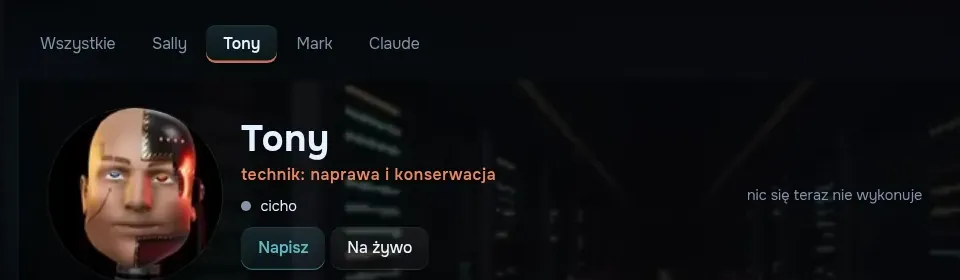
before 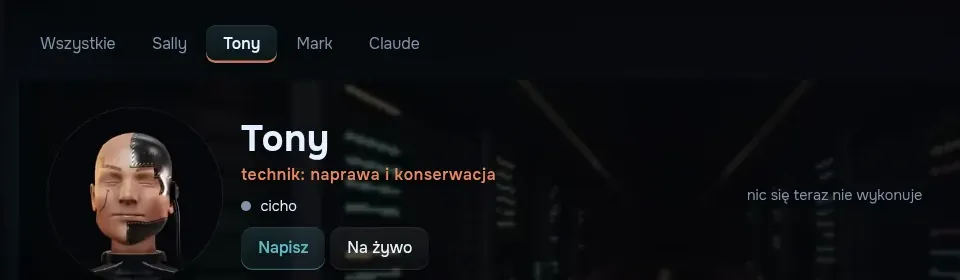
after -
Heads: each agent has its own look
Mark wears a knit cap, a boom microphone and a circuit pattern under the eyes, Tony has a heavier silhouette. Shoulder armour differs per agent (Sally satin, Tony scratched matte metal, Mark carbon), and the neon in the eyes brightens with the music's bass and takes its colour.
see → -
Security centre in the core
The GitCloud core scores an installation's security from 0 to 100 and suggests a fix for each finding. The shield checks links in messages against public phishing domain lists, ClamAV scans attachments, and the panel shows a 30-day log with a "not a threat" button.
see → -
Agent heads with shoulders, new panel and remote recordings
Sally, Tony and Mark are recorded with shoulders, as on the live head page. The panel and remote videos and the screenshots of decision cards, agents and models were retaken in the current look, on sample data. The data platform cover shows the night in large type.
see →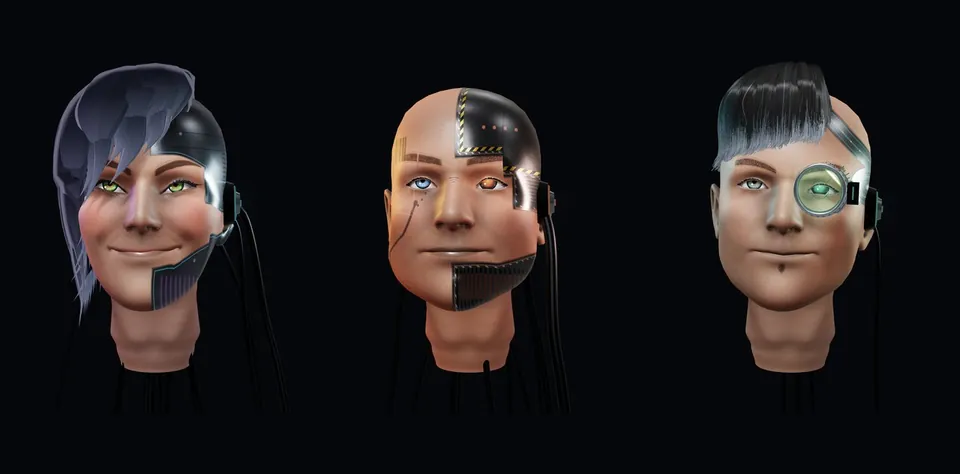
before 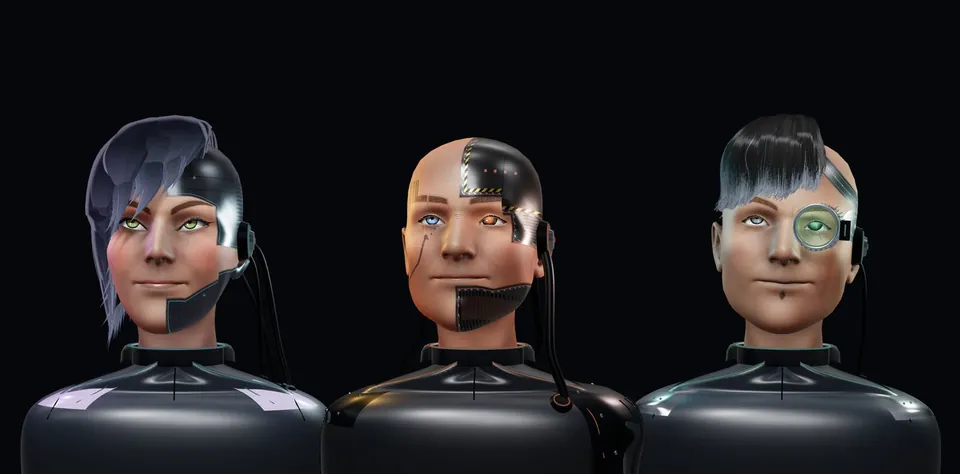
after -
Task thread on the panel screenshots
An expanded Claude session now shows its gist and a strip of steps with the current step labelled. The panel has a calmer palette, like this site: option buttons without glow. Screenshots retaken on sample data.
see →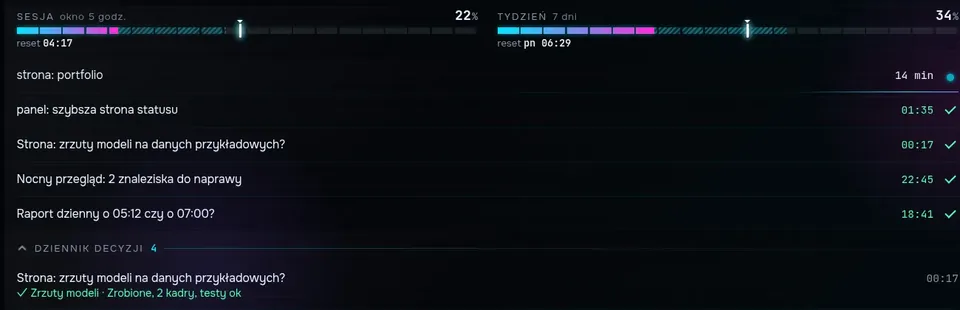
before 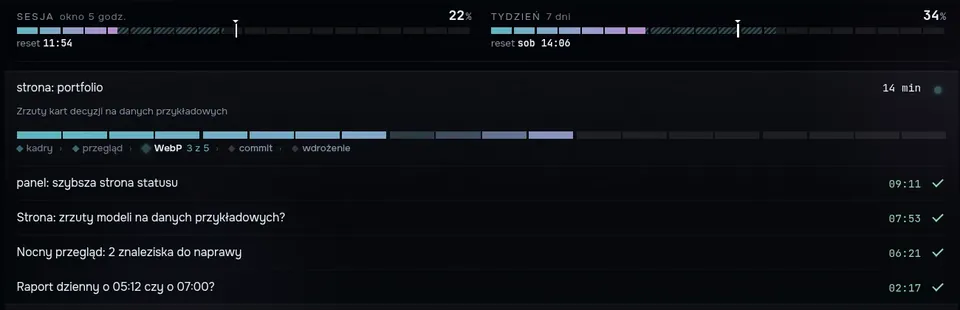
after -
The core collects shared code and lessons
Every night a job moves code that the agents and the panel share into the GitCloud core; the task thread already lives there. Tony's and Mark's lessons (what went wrong and how to fix it) go to the core too, so they work in every installation.
see → -
Heads: hair sheen follows the motion
When a head sways, the highlight on its hair and wires moves with it instead of standing still. A head can also be recorded with shoulders, for new shots on this site.
see → -
Task thread next to Claude sessions
Every Claude session has a strip of steps: decision, session, commits, result. The current step glows, a stuck one pulses amber, a finished one turns green. One tap on the row shows the gist and the whole chain. The same strip is in the panel, on the desktop and in the agent chat, with animations on a shared beat.
see → -
Agent heads: shared chat and a "thinking" state
Mark, Tony and Sally share one chat on the desktop; the addressee is picked by the start of the message or by the head on screen. The head now takes its state from outside: Mark "thinks" while Claude works on an accepted decision, and a caption above the head says what it is doing.
see → -
Day and night checks, the on-call agent reads logs in groups
During the day CI checks only changed files and affected pages, at night everything, so a commit does not wait for a full run. The on-call agent groups log errors (traces, boot windows, bursts) and reports an expired sign-in to me instead of restarting the service.
see → -
New frames: agent heads and interfaces
Sally, Tony and Mark re-recorded on the GPU in their current look. The Interfaces section shows real screens: agent panel, model costs, desktop, ESP32 remote and ISP console. Project covers are enlarged parts of real screens, readable on a phone too. Removed repetitions: rules under the architecture, the terminal in the profile and the list in contact.
see → -
The site looks like the GitCloud panel
Calm palette, one light from above, no outlines or glows; Onest and JetBrains Mono fonts. Colours are no longer written into the site: they come from the GitCloud core (tokens.css), like the panel and the remote. Texts cut down to facts, in the first person.
see → -
Videos from the real interfaces
Project galleries now open with recordings: the operations panel (33 s), AI agents (25 s), the ESP32 remote from its simulator (24 s) and the agents' heads (16 s). All on sample data, recorded by scripts in the repository, so they can be redone after every change.
see → -
Speed and accessibility
Critical first-screen CSS inlined, own font subsets, light thumbnails and video posters. Lighthouse CI after every push; accessibility 100. Astro 7, npm audit with no vulnerabilities.
see → -
New one-page site on Astro
One page instead of several: ecosystem, architecture, projects, ISP console, agents and contact. Three languages (PL, EN, RU), deployed by GitHub Actions to GitHub Pages.
see →